scripsit

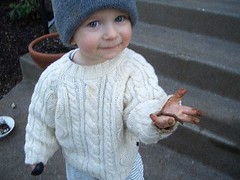
Elias presents ... a worm!    Thoughts on family, philosophy,
and technology

Profile

Tuesday, October 20, 2009

Book: Goddess of the Market

Last week, Jon Stewart interviewed Jennifer Burns, author of a new biography of Ayn Rand, Goddess of the Market: Ayn Rand and the American Right. Burns was reasonable, but made a few incorrect statements: Ayn Rand a "conservative"? [15:50] whose life mission was to defend the right? Actually, AR stressed that she was not a conservative, e.g. she couldn't stand Reagan, and The Fountainhead was not about political philosophy at all, but about the psychology and ethics of spiritual independence. Still, not a hint of the childish insulting tone from either Burns or Stewart that I was expecting (such as Colbert displayed about AR earlier this year). In fact, both of them seem genuinely impressed with AR. So thumbs up to Stewart for intellectual honesty here.


Today, Burns has an article on www.foreignpolicy.com, Howard Roark in New Delhi. This is an interesting description of the popularity of AR in India. But this time Burns labels AR with "libertarianism." Actually, AR stressed that she was not a libertarian, calling libertarianism "a mockery of philosophy and ideology" which often plagiarizes her without credit.

So, Burns seems to be generally intellectually honest from what I've seen so far, and may intend to be objective about AR's political thought -- but she doesn't or can't distinguish between the Objectivist political philosophy and two movements that are profoundly incompatible with Objectivism, as has been described many times by many people, including AR.

Labels: ,

Monday, August 31, 2009

Book: Beyond the Mountain


In Beyond the Mountain, Steve skillfully plots his career with a series of truly amazing stories. Mostly we are treated to gripping descriptions of climbing at the edge of human ability, in which his relentless drive risks his life for reasons he struggles to identify. But there are also understated love stories here -- not of romance, but of the partners and others who have meant the most to him personally in his vertical pursuits.


Steve seems to have put all of himself into this work, writing with a psychological honesty that is uncommon, reliving for us his victories and moments of clarity, but also his intense inner struggles with the desire to succeed and the fear of failure, the love of the sport and the crushing despair over fallen friends, the will to risk everything and the nagging question of why he does this given the intense personal costs. It is because of his brutal honesty, with others but mostly with himself, that what Steve gives us here is truly a gift, a glimpse into another man's soul, so that ironically this biography of the uber-athlete is the story of Everyman.


You will start to read it because it is the must-read of the year for everyone who has ever felt the thrill of going on belay, but you will blast through it and then dwell on it for days because Steve has not tried to oversimplify or falsely dramatize or glorify, but only to describe his lifelong quest to answer with his body the fundamental question of how one should find meaning and fulfillment.

Labels: ,

Thursday, June 18, 2009

Donahue with ITOE


Donahue holding the little book which revolutionizes epistemology, from his first interview of Ayn Rand here.

Labels: ,

Wednesday, June 10, 2009

Le Guin on growing up

You thought, as a boy, that a mage is one who can do anything. So I thought, once. So did we all. And the truth is that as a man's real power grows and his knowledge widens, ever the way he can follow grows narrower: until at last he chooses nothing, but does only and wholly what he must do....

- A Wizard of Earthsea, Ursula Le Guin

Labels: ,

Friday, March 27, 2009

The wonderful irony

During a time of soaring injustice, here's some overdue justice:

Labels:

Tuesday, February 05, 2008

Barsoom*

Elias and I have been having fun watching the videos on the NASA site about the various Mars rovers. I was surprised to learn that there are currently two rovers on Mars (Opportunity and Spirit), and another one on the way (Sojourner), and another super-advanced "science laboratory" rover planned to launch in 2010. My treasured issue of National Geographic with 3-D pictures taken by Pathfinder is seeming so passé.

Our favorite video is "Mars Science Laboratory Mission Animation", which looks so real you'd swear John Carter* had a camera crew.

* Annoyingly cute references are to Edgar Rice Burroughs's action-packed Mars series. The start-up, A Princess of Mars, is great fun (especially if you're a 14-year-old boy), but I thought episode 2, The Gods of Mars, is even more so -- I mean look at how creepy-cool the blue "plant men" are.


Labels: ,

Monday, March 12, 2007

Index cards as bricks

There is an interesting post by Charles Petzold on how and why he wrote Applications = Code + Markup the way he did. The most interesting thing to me is the peek into his writing process:

I spend a lot of time and energy organizing the material in my books. I draw big dependency diagrams on white boards; I make index cards for various topics and then lay them out on the floor in various experimental orders; I write sketchy early versions of half a dozen chapters to test if the material flows correctly. The ordering of material is a central problem in writing a programming tutorial, and I struggle to get it right. I want each chapter to progressively build on the last, like bricks in a wall of knowledge.

Good books always read as if the author sat down with perfect knowledge of the topic and then just said it on paper. Who knew authors litter their office floors with index cards, and their garbage cans with sketchy early versions of chapters. All in a quest to solve a problem that, ironically, the author doesn't have: the reader's lack of knowledge and context.

A large part of the difficulty in building the reader's "wall of knowledge" is a problem of getting the hierarchy right. There must be a buildup of logically dependent pieces -- the epistemological equivalent of a game of Tetris. Some pieces are especially crucial to the goal of completing the wall:
In any book I write, one of my constant goals is to demystify the [topic]. Anything that seems like "magic" is a target for me.
For "[topic]", he actually said "API", but I like this as more general advice for a writer: to maximize the value of your book, make accessible that which was previously least accessible. A corollary I'd like to note: if the topics are already sufficiently accessible, then a new book isn't worth writing.

Petzold regrets the lack of screen shots in ACM, but I have to wonder how much longer the book would have been with them. As it is, I'm on page 55 of 976.

Labels: ,

Tuesday, October 10, 2006

Book review: Theories of Childhood

Here is my review of Theories of Childhood: An Introduction to Dewey, Montessori, Erikson, Piaget, & Vygotsky, as posted on Amazon:

5 out of 5 stars

The worst thing I can say about this little book is that the title doesn't name Mooney's intended audience, which the reader quickly realizes is very specific: the teachers and guides of preschool and early-elementary aged children. But for that audience -- and, I would contend, also for the parents of infants and toddlers -- this is an excellent book. Mooney's purpose is to make the wisdom of these five theorists accessible to those who do not have time or interest to read dense, abstract theory, and I think she has succeeded admirably.

The introduction initially turned me off, as it begins with a rant about the evils of living in contemporary America -- apparently this is meant to show the reader how rational education and childcare are in extra need today. For me this is a throw-away argument: the basic ideas of the theories presented in this book would be extremely important to consider relative to raising children in any culture, time or place. There's no need to get on a soapbox about the "consumerism" and sundry "inequities" of our society.

The rest of the book completely won me over. The main text proceeds in five chapters covering some of the basic ideas of the five theorists named. The author had a difficult challenge in trying to introduce the reader to the complex theories of five extremely prolific thinkers (Piaget alone wrote 30 books) within less than 100 pages, and yet this book is an overwhelming success. This is because by narrowing down her intended audience and focusing on practical advice, Mooney can cover just the basic ideas from each theory that are especially relevant to early-childhood teachers.

The writing is readable and never dull, despite the inaccessibility of some of the thinkers she is presenting, and the structure within each chapter works well: first the theorist is presented generally, then a bit of his or her theory is presented in abstract, culminating in a short list of specific, practical guidelines, which are described with well-chosen, homey examples. For each theorist, there are two or three bits of theory presented this way in rotation. Very short lists of review questions and further reading suggestions follow each chapter.

Mooney makes minimal attempts to note some of the most obvious overlaps between the theorists, as well as some of the contrasts (such as Vygotsky's criticism of Piaget's supposed tendency to view learning as a primarily private affair). But since the focus of this book is on readable, practical advice for teachers -- on putting the theories to use in the classroom -- there is no deep analysis of the theories or of any of their subtleties. Not only are minor points of the theories consciously missing, some of each theory's major points are missing as well. This focus on relevant essentials is a real strength of the book.

As a parent, I loved this book. For one thing, it introduced me to some of the principles of Erikson which I think are critical to good parenting. In the end, I wonder if both teachers and parents of toddlers wouldn't be well-advised to re-read this small book every year.

Labels: ,

Monday, October 02, 2006

Book review: Piaget for Beginners

My book review of Piaget for Beginners, as posted on Amazon.

4 out of 5 stars

This 150-page book is a very quick read, having the "for Beginners" format of pictures and cartoons mixed with very concise text. The book gave me an appreciation for Piaget far beyond his most famous idea of the "stages" of cognitive development, which is actually only covered very late in the book. Piaget was as much epistemologist as psychological theorist and researcher. This is a fine and entertaining overview. The explanations are short and merely give one an appetite for more details, but what is said seems to be stated very carefully and clearly. All in all, a few hours well spent if one seeks an introduction to Piaget.

Labels: ,

Thursday, September 21, 2006

Book review: To Educate the Human Potential

Here is my review of Maria Montessori's To Educate the Human Potential, as found on Amazon:

4 out of 5 stars

The introduction explains that this book is meant to follow _Education for a New World_, and it "helps teachers envisage the child's needs after age six." This book is part theory, part history, covering the psychology of the elementary-aged child, the history of life on Earth, and some highlights and principles of the development of civilization. This seems to be motivation and background material for the "great lessons" of the Cosmic Education as commonly used in elementary Montessori curricula. Those seeking an introduction to core Montessori theory, especially relevant to three- to six-year-olds, would be better off turning to _Education for a New World_, or the more demanding _The Absorbent Mind_.

The first few chapters discuss the educational needs of six- to twelve-year-olds. According to Montessori, it is at the age of six that the child's principle educational need switches from absorption of environment to absorption of culture. A great emphasis is placed upon placing seeds of motivation and "wonder" in the child's mind, using a big, integrating picture of the world which is supposed to raise more questions than it answers, so that the child will desire to fill out his or her knowledge in later years.

The child of this age thirsts for moral knowledge, but also for mental independence, claims Montessori, so moralizing lectures will not be accepted and should not be attempted. She also observes that children of this age have a strong impetus to organize themselves socially.

An elementary program, it is advised, should not over-emphasize hands-on learning nor abstract subjects which require "imagination," but should integrate both, since the personality is one and indivisible.

A chapter is devoted to three psychological principles of the subconscious which are fundamental to the theory: (1) subconscious memory, the "mneme," which is specific to and built into each species; (2) Bergson's "Elan Vitale," or Horme, a vital urge which drives every living creature in every activity of its life; and (3) the Association of Ideas, the principle by which most methods of education conceive that certain ideas must follow and build upon certain others, but is now, Montessori claims, understood by psychologists to be only superficially true on the conscious level, though it does importantly apply to the operation of engrams in the subconscious. The chapter ends with a fascinating argument that a real love for humanity, for one's "neighbor," cannot be based on preachy, patronizing sentiments of political or religious brotherhood, but only upon recognition of the productive toils of those countless individuals, living or dead, who have built and benefited our world.

Several chapters tell the story of the world, its nature and history. Surely much of the science here is out of date. The theoretical point met again and again is that the planet and the lifeforms upon it are all interrelated as one whole, working in symphony, progressing upon the Cosmic Plan. This teleological, somewhat mystical theme seems out of place in Montessori's theory, given her otherwise tremendous dedication to a naturalistic worldview. One thing missing from her cosmological account here is what will eventually be the first "great lesson" in Montessori curricula -- I'm guessing Big Bang theory was not incorporated into the Cosmic Education at this point because it was not yet well known or accepted.

At one point she mentions the huge chart of world history which is still used in Montessori elementary classes, saying: "[Children] see how brief has been the human span, compared with what went before it, yet how great has been its work!" Incidentally, this is the exact opposite of the interpretation of some current Montessori teachers, who hope that their students will perceive on the chart how small and unimportant humanity is.

For a few chapters the story switches to human history, up to the Hellenic age. Dr. Montessori emphasizes that humans may have weak bodies, but also a "new cosmic energy" in their mental faculties, by which they have developed superiority in all things, and have become "God's chief agent on earth for creation." She discusses human greatness at length: "[T]he history of human achievements is real, a living witness to the greatness of man, and the children can easily be brought to thrill to the knowledge that there are millions of people like themselves, striving mentally and physically to solve the problems of life, and that all contribute to a solution though [only] one may find it."

It is interesting, if not a contradiction, that although Dr. Montessori was a champion for peace, she here discusses the great value of ancient wars and conquests, which resulted "in added wealth of one kind or another to both conquered and the conqueror, and to the sum of human life in general." The whole world is like an organism, with its own vital functions, interdependent organs, and teleological ends.

On the one hand she appreciates the wisdom of certain religious language -- saying that the cosmic plan may be called the Will of God -- but she also describes the limits and divisive effects of religions: "Religions and languages keep men apart, while arts, sciences and products of industry unite them." Eventually, she tells us, education will succeed and "religion then will not need to be taught, which it cannot really be, but reverence for truth, inner as well as outer, will grow in natural freedom...."

Labels: ,

Wednesday, August 30, 2006

Book review: Education for a New World

Here is my review of Maria Montessori's Educaton for a New World, as posted on Amazon:

5 out of 5 stars

This book seems to be a shorter presentation of much of the material found in The Absorbent Mind, which requires a good deal more persistence. At less than 100 pages, this book is easy to take in, while still containing fundamental principles of Montessori's theory of education, especially as relevant to 3- to 6-year-olds. The writing is engaging, not academic. I can easily recommend it to be the first or only book by Dr. Montessori for the parent of a toddler to read. There is not much here specifically relevant to the nature of elementary-level Montessori programs, however.

Perhaps the foundational concept of Montessori's overall theory is that of the young child's "absorbent mind": "the child has a type of mind that absorbs knowledge, and thus instructs himself." The universal example is that of language acquisition, which is flawlessly and gleefully accomplished by 2-year-olds who cannot read books or ask questions or attend lectures, while the same entails a very laborious and error-prone effort for adults. The child's mind is, from birth, forming itself and its "organs" (drawing an analogy to embryology) by its own natural impetus and direction. Environment is key. "[T]he child who, making use of all that he finds around him, shapes himself for the future." Up until age 3, the child's mind is "unapproachable by the adult, who can exercise no influence on it." From 3 to 6, the child is able to tirelessly concentrate upon an environment carefully crafted with his or her psyche in mind, absorbing its lessons.

Another fundamental concept in the theory is that of the "normal" child, the "true" child which is revealed only when the environment is right. Defects of character which may have been present before age 3 are resolved during the ages of 3 to 6, if the provided environment plays to the power and nature of the absorbent mind.

The title of the book reflects the author's belief that the world which "has been torn to pieces" (presumably these words were written during or soon after WW2) can only be fundamentally reconstructed through education. Children create themselves, they create adults, and thereby they are the creators of culture and civilization and the whole world -- they are all-powerful in this sense, and therein lies the fundamentality of education as a cause of history.

Montessori also presents a notion of cosmic harmony, such that every organism is performing the role it was perfectly designed, through evolution, to perform. There is both a sense of a normally pleasant universe here, as well as a questionable assumption of some important extra-personal purpose for each of us. Not much in Montessori's program for 3- to 6-year-olds relies on this latter point, that I can find.

Some other points discussed: the importance of using the body, especially the hands, in learning; the stages of physical and mental development, and of language learning; the small child's healthy motivation to complete tasks which may seem pointless to adults; the construction -- not "teaching" -- of moral character; obedience as obtained through freedom, not fear; and what is required of the Montessori teacher or guide.

Labels: ,